There’s a moment after losing a pet when someone asks how you’re doing, and you open your mouth, and nothing comes. Not because you don’t feel anything – because you feel everything, all at once, and no sentence you can think of is big enough to hold it. The weight of an empty leash. The phantom jingle of a collar. The way the house sounds wrong now, like someone turned the volume down on your entire life.
That’s where poetry lives. In the gap between what you feel and what you can say. Pet memorial poems have carried people through grief for centuries – not because the words fix anything, but because they prove that someone else has stood in this exact spot and survived it. You read a line, and something inside you unclenches, just for a moment, because somebody understood.
This collection brings together the most meaningful pet memorial poems we’ve found – classic and modern, long and short. Some will make you cry. Some will make you feel held. All of them are here because they say something true about what it means to love an animal and then to lose one.
Why Poetry Helps in Pet Loss
Grief is not a linear experience. It doesn’t follow a schedule, it doesn’t respond to logic, and it certainly doesn’t care that you have a meeting at 9 a.m. It ambushes you – in the car, in the pet food aisle, at 2 a.m. when you reach for a warm body that isn’t there anymore. If you’re in the thick of that first year after losing a pet, you know exactly what this feels like.
Poetry works in grief for the same reason music does. It bypasses the rational brain – the part that says “it was just an animal” or “you should be over this by now” – and speaks directly to the part that is hurting. A good poem doesn’t explain your grief. It mirrors it. It says: yes, this is real. Yes, this is allowed. Yes, this matters.
There’s also something about the structure of poetry that helps. Grief can feel formless – this enormous, shapeless thing pressing against your chest. A poem gives that feeling edges. It contains the uncontainable, even if only for a few lines. You read it, and you can hold the grief in your hands for a moment, look at it, breathe, and set it down.
That’s why people reach for pet memorial poems when writing sympathy cards, designing memorial keepsakes, or planning a small farewell ceremony. The right poem doesn’t just decorate a moment – it anchors it. It gives people permission to feel what they’re already feeling and to honor the relationship they lost without apology.
Classic Pet Memorial Poems
Some poems have endured for generations because they say something so precisely true that time doesn’t wear them out. These are the ones people return to again and again, across decades and continents, because the grief of losing a beloved animal is universal.
“A Dog Has Died” by Pablo Neruda
Neruda – the Nobel Prize-winning Chilean poet – wrote this poem about losing his own dog, and the honesty in it is disarming. He doesn’t sentimentalize. He doesn’t reach for easy comfort. He simply tells the truth about what it meant to share his life with an animal who loved without complication.
Yes, I believe in a heaven for all dogdom
— Pablo Neruda, “A Dog Has Died” (excerpt)
where my dog waits for my arrival
waving his fan-like tail in friendship.
This poem is still in copyright, so we share only a short excerpt here. You can find the full text through Neruda’s published collections.
This poem works beautifully for anyone who loved a dog with a personality – the mischievous ones, the imperfect ones, the ones with bad manners and big hearts. It’s especially fitting for people who aren’t traditionally religious but still feel, deep down, that their dog is somewhere good. It’s one of the most honest pet memorial poems ever written, and it hits differently every time you read it.
“The Power of the Dog” by Rudyard Kipling
Kipling understood the particular bargain we make when we bring a dog into our lives. We know, going in, how it ends. And we do it anyway. This poem – written over a century ago – asks the question every grieving pet owner has whispered at 3 a.m.: was it worth it?
There is sorrow enough in the natural way
From men and women to fill our day;
And when we are certain of sorrow in store,
Why do we always arrange for more?
Brothers and sisters, I bid you beware
Of giving your heart to a dog to tear.
The poem seems at first to warn against loving a dog – but anyone who has lost one and then loved another knows the real answer. We give our hearts because the love is worth the tearing. Kipling knew it too. This poem is ideal for someone in the thick of loss who is questioning whether they could ever do this again. The answer, when they’re ready, is almost always yes.
“Epitaph to a Dog” by Lord Byron
Lord Byron inscribed these words on the monument for his beloved Newfoundland, Boatswain, and they remain among the most stirring tributes ever written to a dog:
Near this spot
Are deposited the remains of one
Who possessed beauty without vanity,
Strength without insolence,
Courage without ferocity,
And all the virtues of man without his vices.
Byron captures something every dog owner has felt – the quiet superiority of canine character. Dogs don’t hold grudges. They don’t keep score. They love without conditions, and they forgive instantly. If you’re looking for a memorial tribute for a dog who embodied dignity and devotion, these words carry real weight.
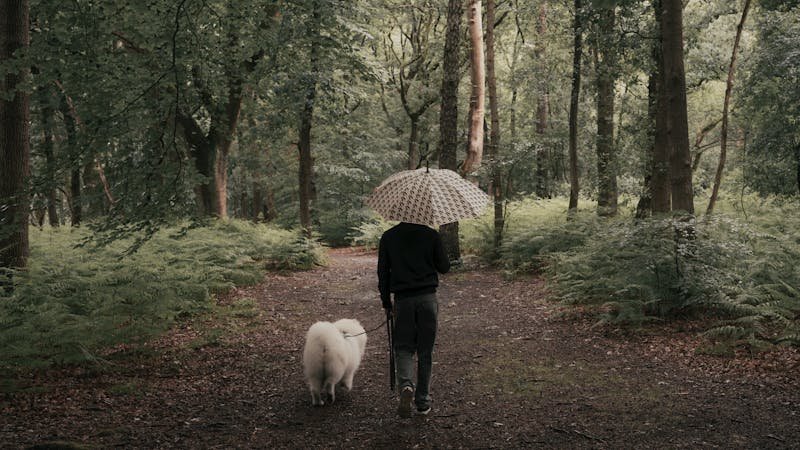
The Rainbow Bridge
No collection of pet memorial poems is complete without “The Rainbow Bridge.” It is, by far, the most widely shared piece of writing about pet loss in the English language – and for good reason. If you want to read the full version with deeper context, we have a dedicated page on the Rainbow Bridge poem for dogs.
The poem’s authorship was debated for decades – it circulated anonymously through pet bereavement communities and veterinary offices, spreading most widely from the 1980s onward. Then, in 2023, research credited Edna Clyne-Rekhy, a Scottish woman who said she wrote it in 1959, at nineteen, after losing her dog Major. We tell that full story on our Rainbow Bridge poem page.
The core image is this: when a pet dies, they go to a lush meadow at the edge of heaven – a place of warmth, health, and happiness. They run and play, restored to full health, free of pain. And they wait there. They wait until the day their owner arrives, and then they cross the Rainbow Bridge together into eternity.
Just this side of heaven is a place called Rainbow Bridge.
When an animal dies that has been especially close to someone here, that pet goes to Rainbow Bridge. There are meadows and hills for all of our special friends so they can run and play together. There is plenty of food, water and sunshine, and our friends are warm and comfortable.
All the animals who had been ill and old are restored to health and vigor. Those who were hurt or maimed are made whole and strong again, just as we remember them in our dreams of days and times gone by.
The animals are happy and content, except for one small thing; they each miss someone very special to them, who had to be left behind.
They all run and play together, but the day comes when one suddenly stops and looks into the distance. His bright eyes are intent. His eager body quivers. Suddenly he begins to run from the group, flying over the green grass, his legs carrying him faster and faster.
You have been spotted, and when you and your special friend finally meet, you cling together in joyous reunion, never to be parted again. The happy kisses rain upon your face; your hands again caress the beloved head, and you look once more into the trusting eyes of your pet, so long gone from your life but never absent from your heart.
Then you cross Rainbow Bridge together.
The Rainbow Bridge resonates so deeply because it addresses the specific fear that haunts every grieving pet owner: are they alone? Are they scared? Are they waiting for me? The poem answers all three: they are safe, they are happy, and yes – they are waiting. They will always wait.
This poem is most fitting in the acute phase of grief – those first days and weeks when the loss is still sharp and you need to believe that your pet is somewhere good. It works beautifully in sympathy cards, memorial frames, and graveside tributes. It’s also a gentle way to explain pet loss to children, because the imagery is vivid and comforting without being abstract.
If the Rainbow Bridge feels too sentimental for your taste, that’s okay. Not every poem is for every person. But for millions of people over the past four decades, these words have been exactly the thing they needed to hear at the worst possible moment. There’s power in that.
Modern Pet Memorial Poems
Sometimes the older poems, beautiful as they are, don’t quite capture the way we live with our pets today – the couch cuddling, the car rides, the specific absurdity of a cat who sleeps in the bathroom sink or a dog who is personally offended by the mailman. Modern pet memorial poems tend to be more conversational, more intimate, and more willing to sit in the mess of grief without trying to resolve it.
“The Last Walk”
We took the same path we always did,
past the house with the barking dog,
past the fire hydrant you had to check every time,
past the spot where you once found a sandwich
and looked at me like you’d discovered gold.
You walked slower that day.
I matched my pace to yours,
the way you had matched yours to mine
for thirteen years.
At the corner where we usually turned left,
you stopped and looked up at me,
and I swear you were saying:
This was a good walk. All of them were.
This poem captures the quiet intimacy of those final days – the small, unremarkable moments that become sacred in hindsight. It’s ideal for someone who is grieving a dog they walked with every day and who now can’t pass those same streets without feeling the absence.
“What the Cat Knew”
She never fetched or came when called.
She never learned a single trick.
She simply chose the warmest lap
and loved me on her terms, not mine.
But somehow she always knew.
When I cried, she’d press her head
against my hand and hold it there
as if to say: I’m here. I’m here.
The house still smells like her.
Her bowl is by the door.
And I keep waiting for the sound
of paws on the kitchen floor.
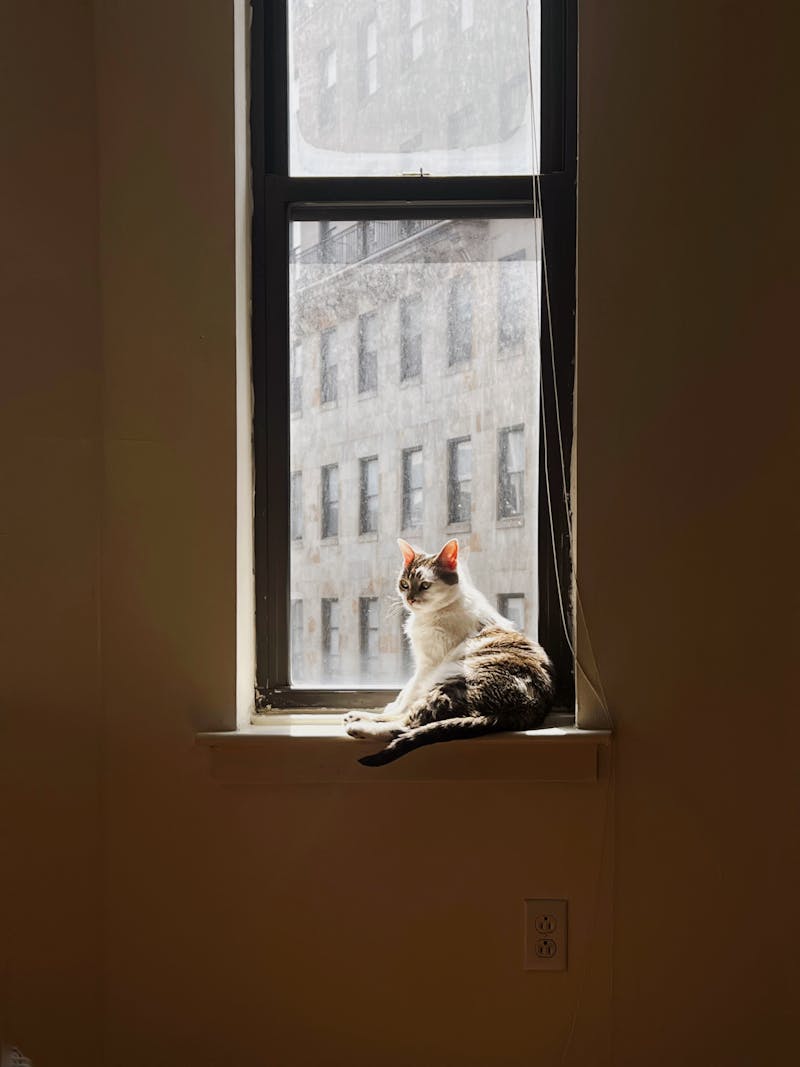
Cat grief is its own particular shape. Cats don’t love the way dogs do – loudly, obviously, with their whole body. They love quietly, on their own schedule, in ways you don’t fully understand until they’re gone. This poem is for anyone who has lost a cat and is struggling with the specific silence they left behind.
“If It Should Be”
If it should be that I grow frail and weak,
And pain should keep me from my sleep,
Then you must do what must be done,
For this last battle can’t be won.
You will be sad, I understand.
Don’t let your grief then stay your hand.
For this day, more than all the rest,
Your love and friendship stand the test.
We’ve had so many happy years.
What is to come can hold no fears.
You’d not want me to suffer so;
When the time comes, please let me go.
This poem is written from the perspective of the pet, and that shift in voice is what makes it so devastating – and so healing. It speaks directly to the guilt that almost every pet owner carries after euthanasia: did I do the right thing? Was it too soon? Was it too late? The poem says, gently and clearly: you did the right thing. It was an act of love. The hardest one, but the most important.
If you know someone navigating this particular pain, this poem pairs beautifully with a personalized memorial gift that celebrates the life rather than dwelling on the ending.
Short Pet Memorial Poems for Cards and Keepsakes
Sometimes you need something brief – a few lines for a sympathy card, a memorial stone, a picture frame, or a keepsake box. Short doesn’t mean shallow. The best short pet memorial poems distill an ocean of feeling into a few drops.
For a sympathy card:
Not gone. Just walking
a little ahead of you now,
down a path you can’t see yet –
tail wagging, ears up,
waiting at every turn
to make sure you’re still coming.
For an engraving or memorial stone:
You were my good morning
and my goodnight.
Now you are my always.
For a photo frame:
I kept your collar.
I kept your bowl.
But what I really kept
was everything you taught me
about being loved.
For a cat memorial:
You chose the sunniest spot in every room.
Now the sun finds it, and you’re not there,
and the whole house leans toward the shadow.
For a dog memorial:
You greeted every day
like it was the best one yet.
I’m trying to do that too,
for you.
These shorter poems work well when space is limited but the feeling isn’t. If you’re writing a sympathy card and want guidance on what to say alongside a poem, our guide on personalized gifts vs. flowers can help you choose a tribute that lasts.
How to Choose the Right Poem
With so many beautiful pet memorial poems available, choosing the right one can feel overwhelming – especially when you’re grieving and every word lands with extra weight. Here are some honest guidelines.
Consider the tone of the grief. Is this loss fresh and raw, or has it softened into something the person carries daily? For acute grief, the Rainbow Bridge and “If It Should Be” tend to resonate because they offer comfort and absolution. For someone who is further along, Neruda’s poem or “The Last Walk” may feel more fitting because they celebrate the life rather than cushion the loss.
Consider the pet. A poem about a dog’s devotion won’t land the same way for someone who lost a cat – not because the grief is different, but because the relationship is different. Cats and dogs love differently, and the right poem should reflect the specific kind of companionship that was lost. Choose a poem that sounds like it could be about their animal, not just any animal.
Consider the person. Some people find comfort in spiritual imagery – heaven, meadows, reunion. Others find it hollow or even painful. Know your audience. A poem about crossing into paradise may bring peace to one person and frustrate another who just wants someone to say: this hurts, and it’s supposed to hurt, because what you had was real.
Consider the setting. A memorial stone needs something short and permanent. A sympathy card needs something gentle but not presumptuous. A framed tribute needs something with enough substance to stand on its own as a piece of art. Match the poem to where it will live.
Trust your gut. If a poem makes you stop mid-line and catch your breath – if it says the thing you’ve been thinking but couldn’t articulate – that’s the one. Grief doesn’t need literary analysis. It needs recognition. The right poem is the one that makes you feel seen.
Personalizing a Poem for Your Pet
Here’s the truth about even the most beautiful pet memorial poems: they’re written for everyone, which means they’re written for no one in particular. The Rainbow Bridge doesn’t mention the way your dog used to steal socks from the laundry basket. Kipling didn’t know about your cat’s obsession with bottle caps. Neruda never met the golden retriever who was afraid of butterflies.
The specific things – the weird habits, the particular sounds, the routines that only you and your pet shared – those are what made the relationship yours. And those are the things a generic poem, no matter how well-written, can never capture.
That’s why personalizing a poem matters. You can start with one of the poems in this collection and adapt it – replace a line or two with something specific to your pet, add a stanza about their quirks, change the details to match your experience. Or let our free pet memorial poem generator write one from your memories in seconds. Some people find that the act of writing itself is therapeutic, a way of processing the grief through the same kind of careful attention they gave their pet in life.
If you want to take that a step further, you can also commission a poem written from scratch about your specific pet – their personality, their habits, the moments that defined your time together. At Still Beside Me, that’s exactly what we do. We take your memories – the real ones, the specific ones, the ones that make you laugh and cry at the same time – and turn them into a personalized poem that sounds like it could only be about them. Because it is.
A personalized poem isn’t a replacement for the classics. It’s a companion to them. The Rainbow Bridge tells you they’re at peace. A personalized poem tells the world who they were. Both matter.
Using Poems in Memorial Art
A poem read once and tucked into a drawer is a comfort. A poem displayed in your home is a presence. There’s a real difference between the two, and it has to do with what happens to grief when it has a physical place to live.
When you frame a pet memorial poem alongside a photo of your pet, you create something that does double duty: it honors the animal you lost, and it gives you a daily point of contact with their memory. Not the painful, ambush-style contact that comes from stumbling on a toy under the couch – but the gentle, intentional kind. The kind that reminds you of the love before it reminds you of the loss.
Here are a few ways people use pet memorial poems in their homes:
Framed with a photo. This is the most common and arguably the most powerful approach. A poem paired with the right photograph creates a complete memorial – the image captures how they looked, and the words capture how they felt. It’s a tribute that doesn’t need explanation. Guests see it, and they understand immediately: someone important lived here.
On a memorial shelf or table. Some families create a small memorial space – a shelf with their pet’s photo, collar, a candle, and a printed poem. It becomes a quiet place to sit with the memory, especially on hard days – anniversaries, birthdays, the day they passed.
In a memory book or shadow box. A poem can anchor a collection of keepsakes – a lock of fur, a paw print, their favorite toy, a photo from their last good day. The poem becomes the thread that ties all the physical objects to the emotional truth of what they meant to you.
As part of a garden memorial. For pets who were buried at home or whose ashes were scattered in a garden, a short poem engraved on stone or printed on a weatherproof plaque gives the space meaning. Every time you walk past it, the words are there – quiet, steady, permanent.
If you’re considering a framed memorial tribute, our pet memorial collection pairs a custom-written poem with your pet’s photo, their name and the years you shared set into the artwork, in an elegant frame you choose. You approve every word before it prints. It’s the kind of piece that becomes a permanent part of your home – not a grief artifact you eventually put away, but a celebration of a life that shaped yours.
The poem that matters most
You can read every pet memorial poem ever written. You can bookmark the ones that make you cry, share the ones that make you feel less alone, and frame the one that says the thing you can’t say yourself. All of that is good and right and worth doing.
But the poem that matters most is the one that’s specific to your pet. The one that mentions the way they tilted their head when they were confused, or the sound they made when they wanted dinner, or the way they always had to be touching you – a paw on your foot, a head on your lap, a body pressed against your side as if to say: I’m here. You’re not alone.
Those details are the poem. Your memories are the verses. The years you spent together are the stanzas. And the love – the ordinary, daily, unremarkable love that was actually the most remarkable thing in your life – that’s the whole work.
They may be gone from the room. But they’re not gone from the story. They’re still in the lines. They’re still beside you.
Keep reading
If you’re putting together a gift for someone who just lost their dog, we’ve written a complete guide on what to get someone who lost a dog. For ideas beyond flowers and cards, see what to send instead of flowers. And if you want to understand what the grieving person is going through, read about the first year after losing a pet.