The Writing
We don't write about grief.
We write the pet back into the room.
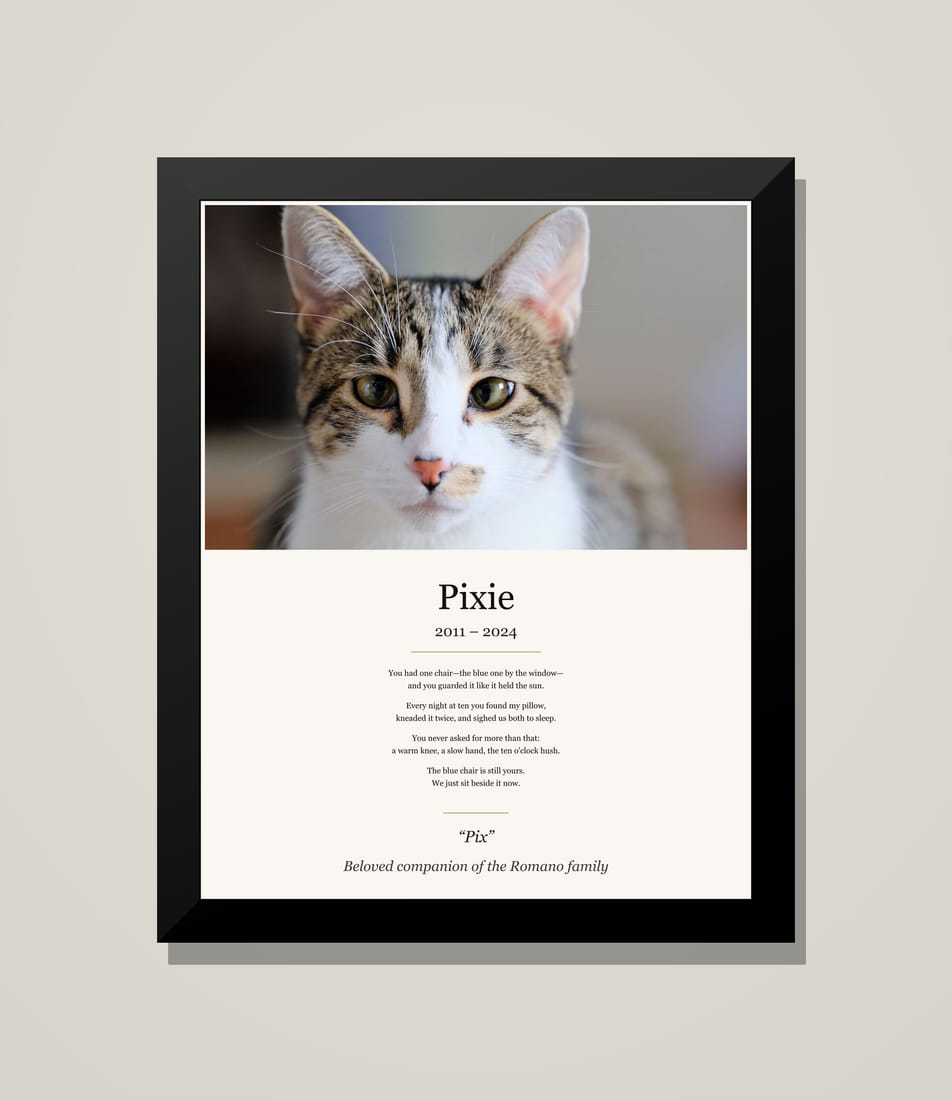
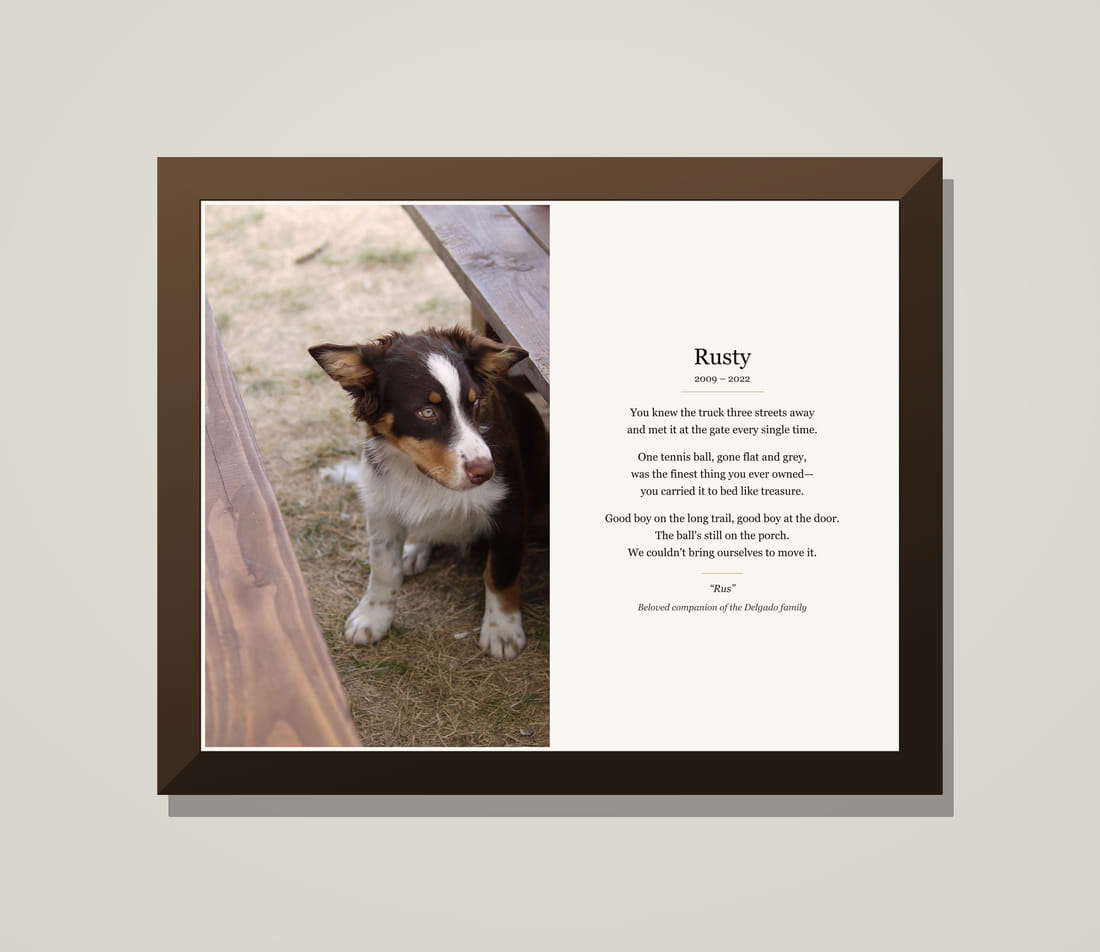
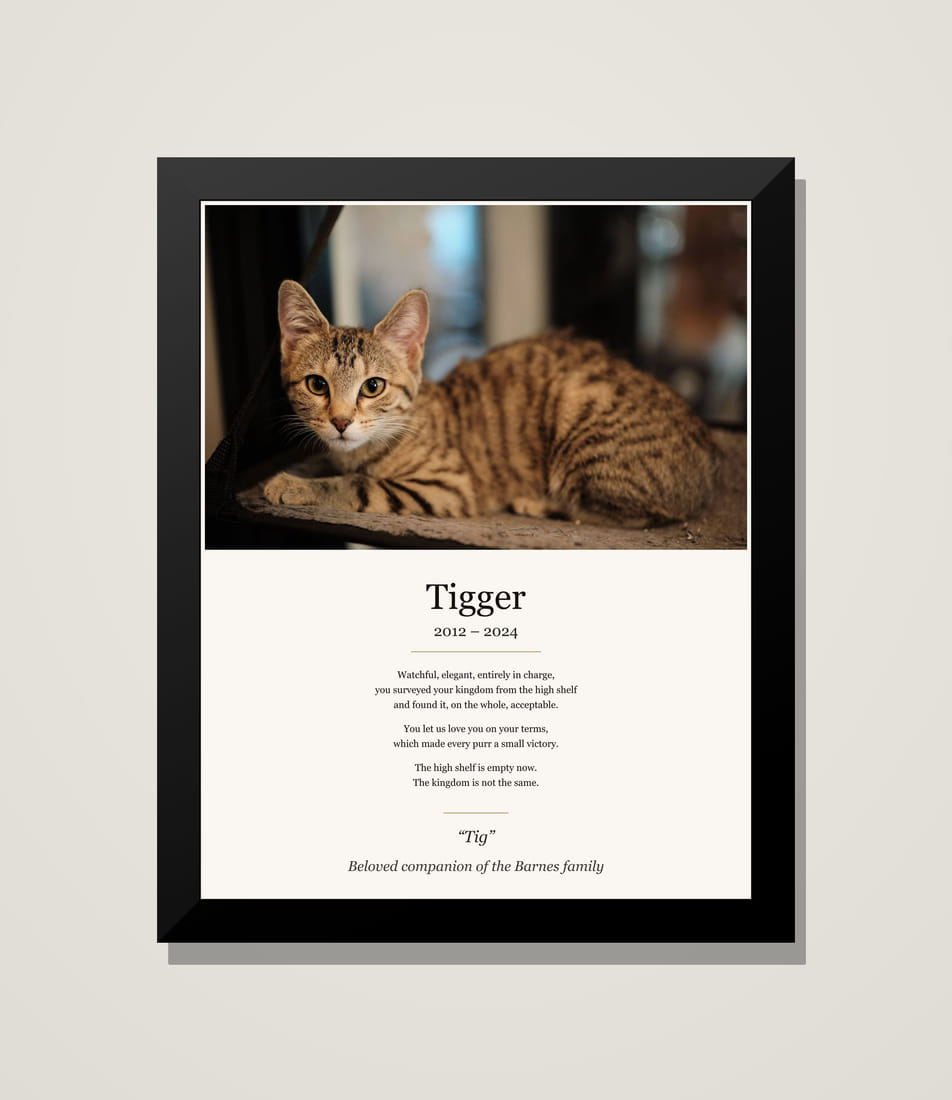
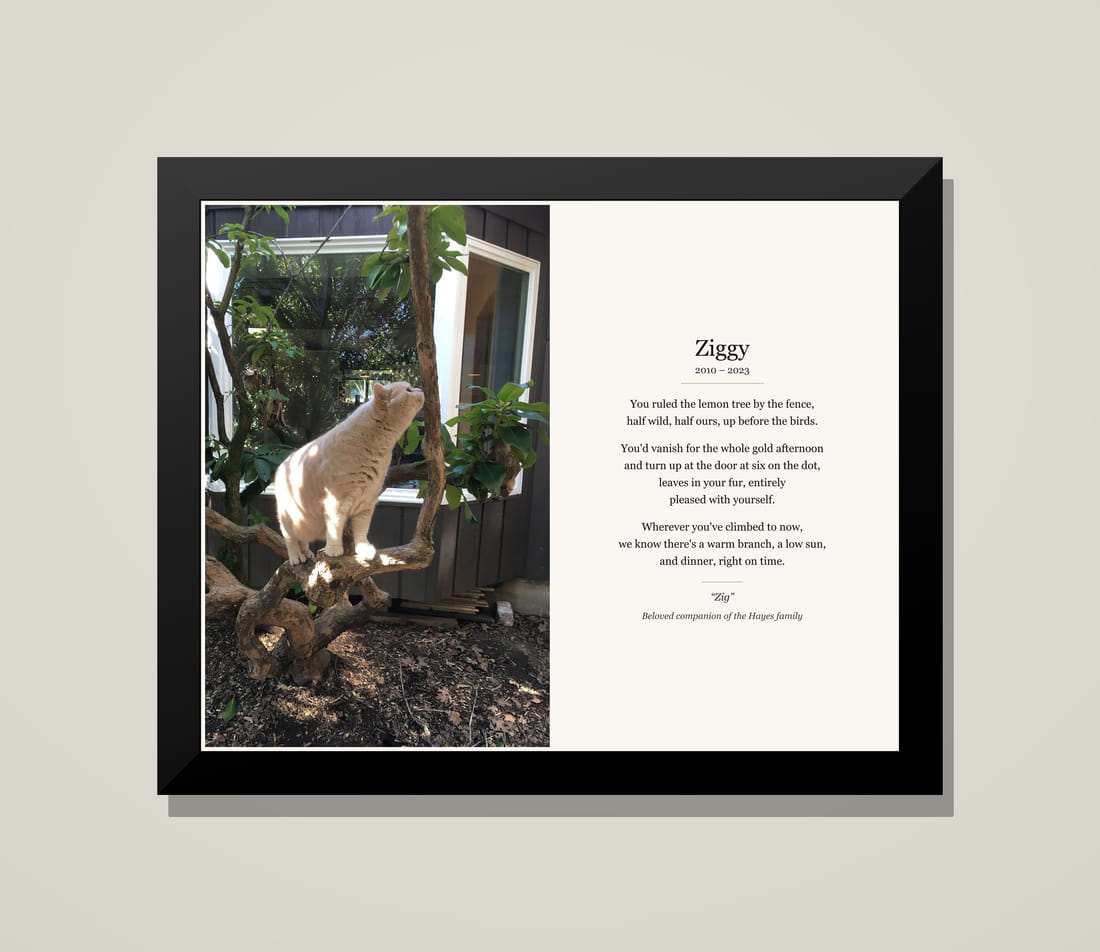
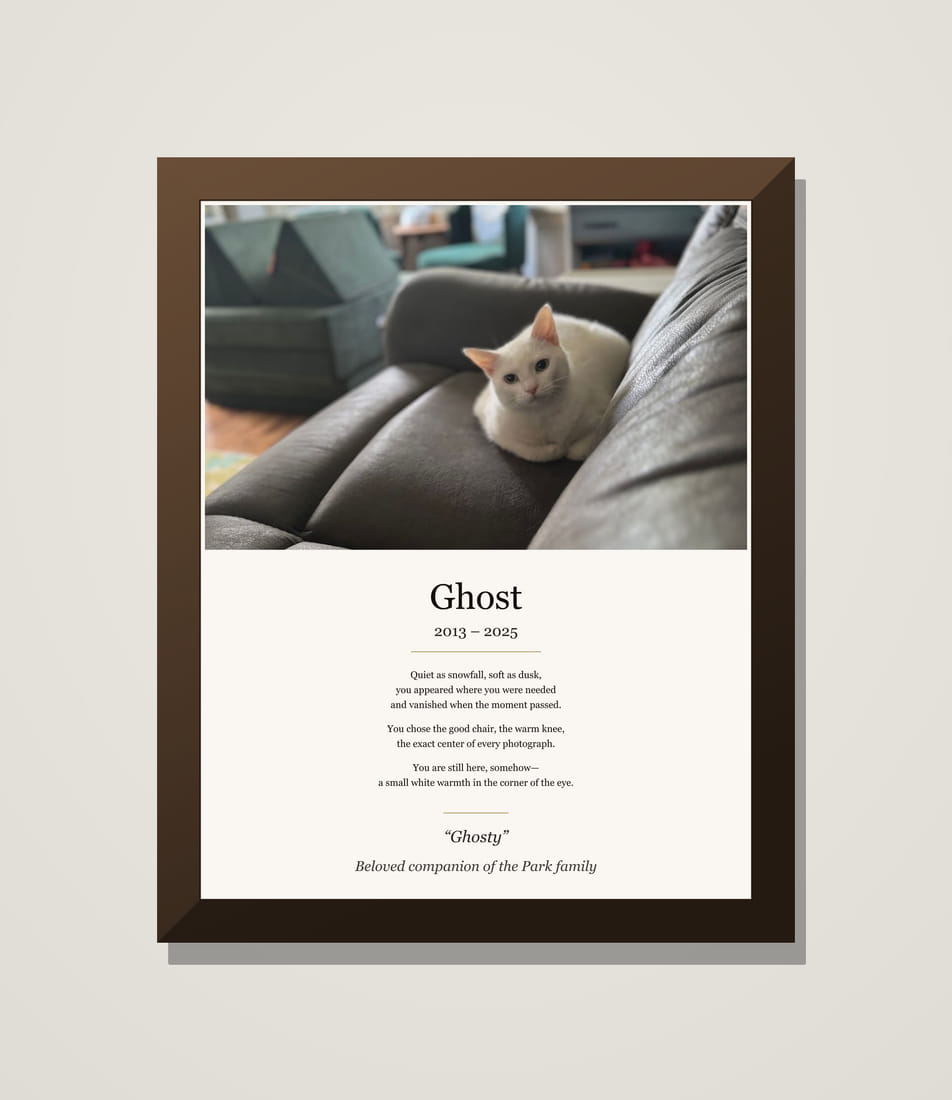
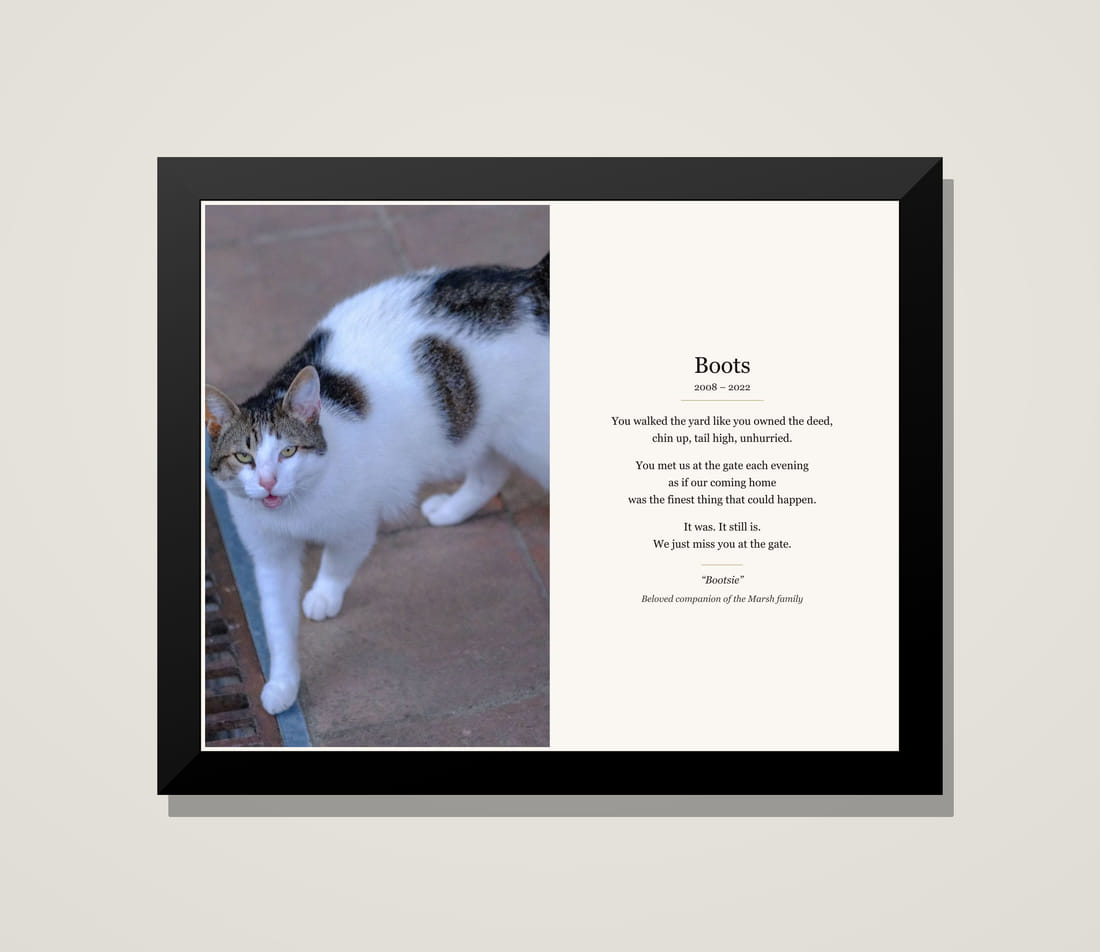
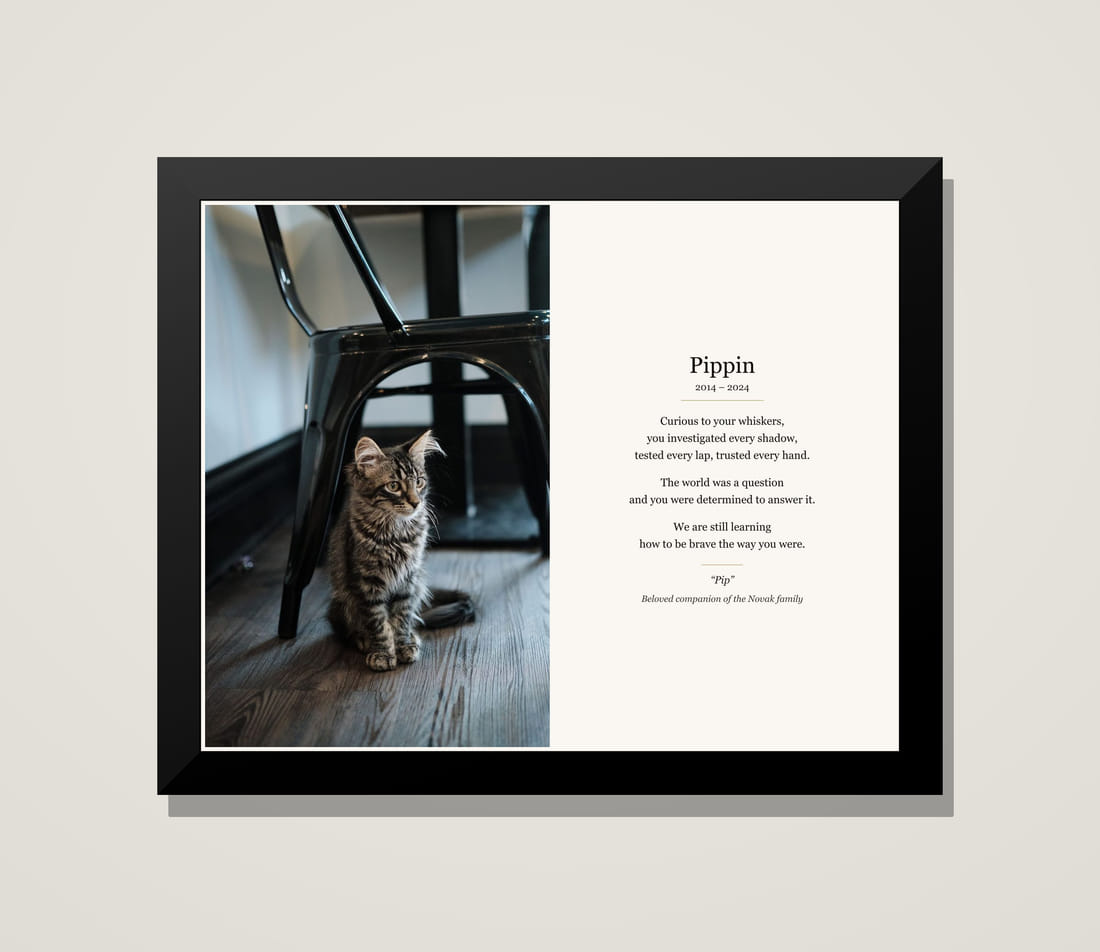
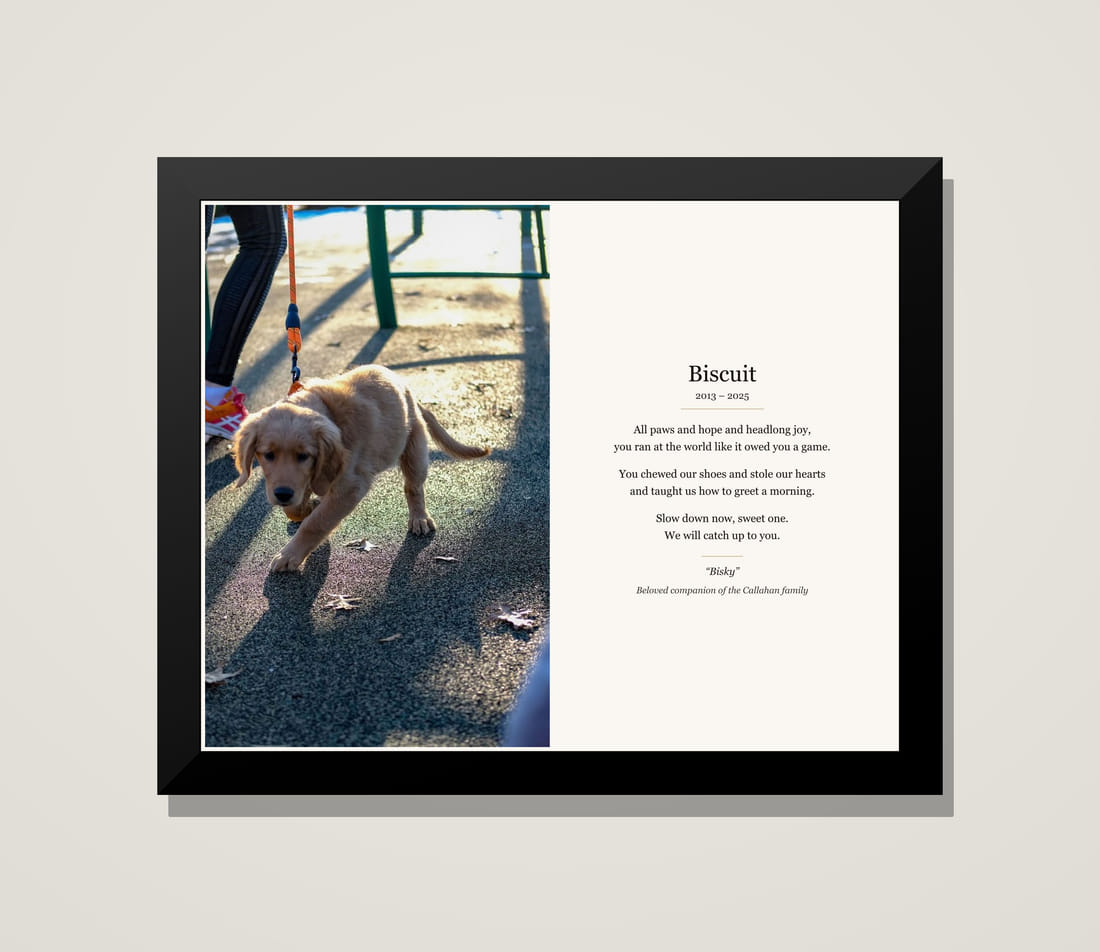
Every tribute is a photograph and a poem. The photograph shows you the animal. The poem does the harder thing. It puts down the small ordinary details that made them who they were. Read one below, the way it hangs on the wall.
Recognizable, not interchangeable.
Most memorial writing stays general. The loyal friend, the hole in the heart, the bridge. Ours goes the other way. It reaches for the one flat grey tennis ball, the truck heard three streets away, the exact spot by the door. A stranger could pick your dog out of a crowd from the poem alone.
The line that undoes you is the one still in the room.
The hardest lines aren't about dying. They're about the ordinary thing left behind, still sitting there, still waiting, as if nothing had changed.
The blue chair is still yours. We just sit beside it now.Pixie
The ball's still on the porch. We couldn't bring ourselves to move it.Rusty
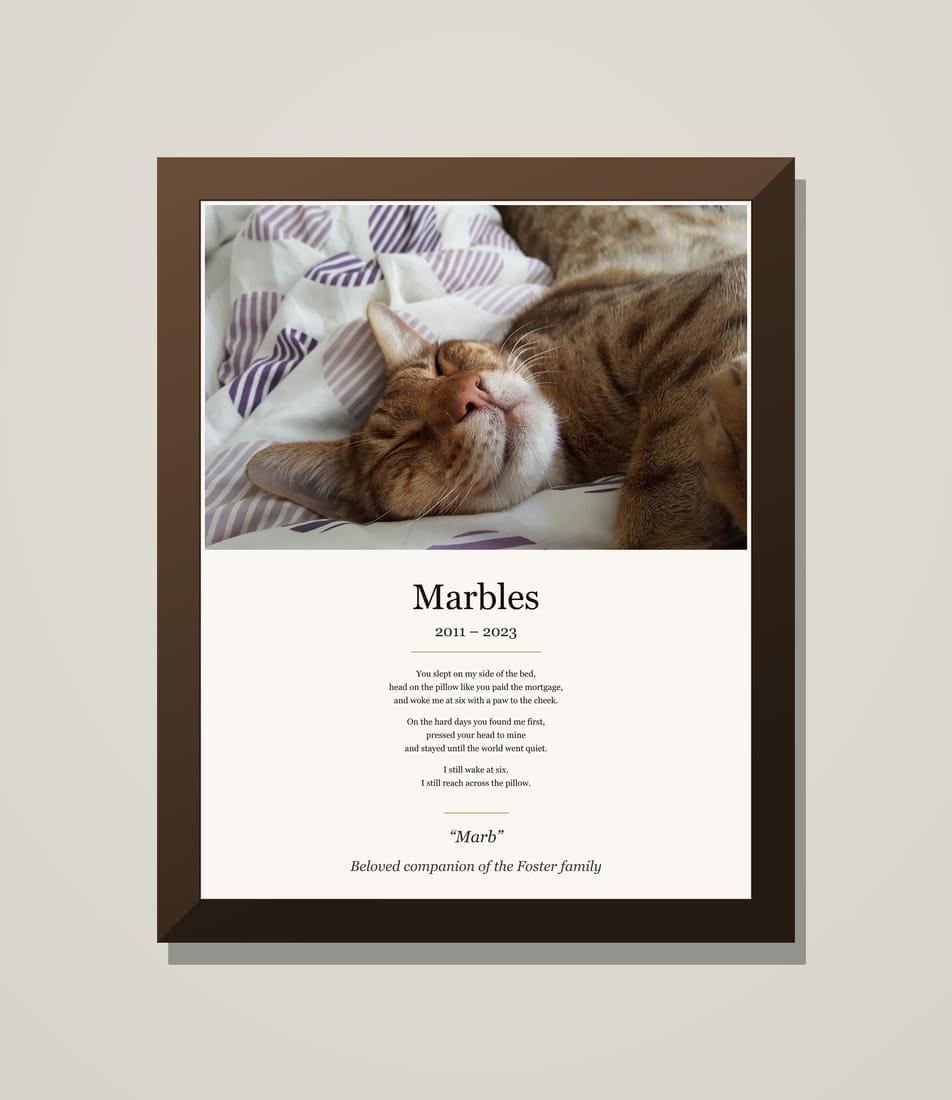
I still wake at six. I still reach across the pillow.Marbles
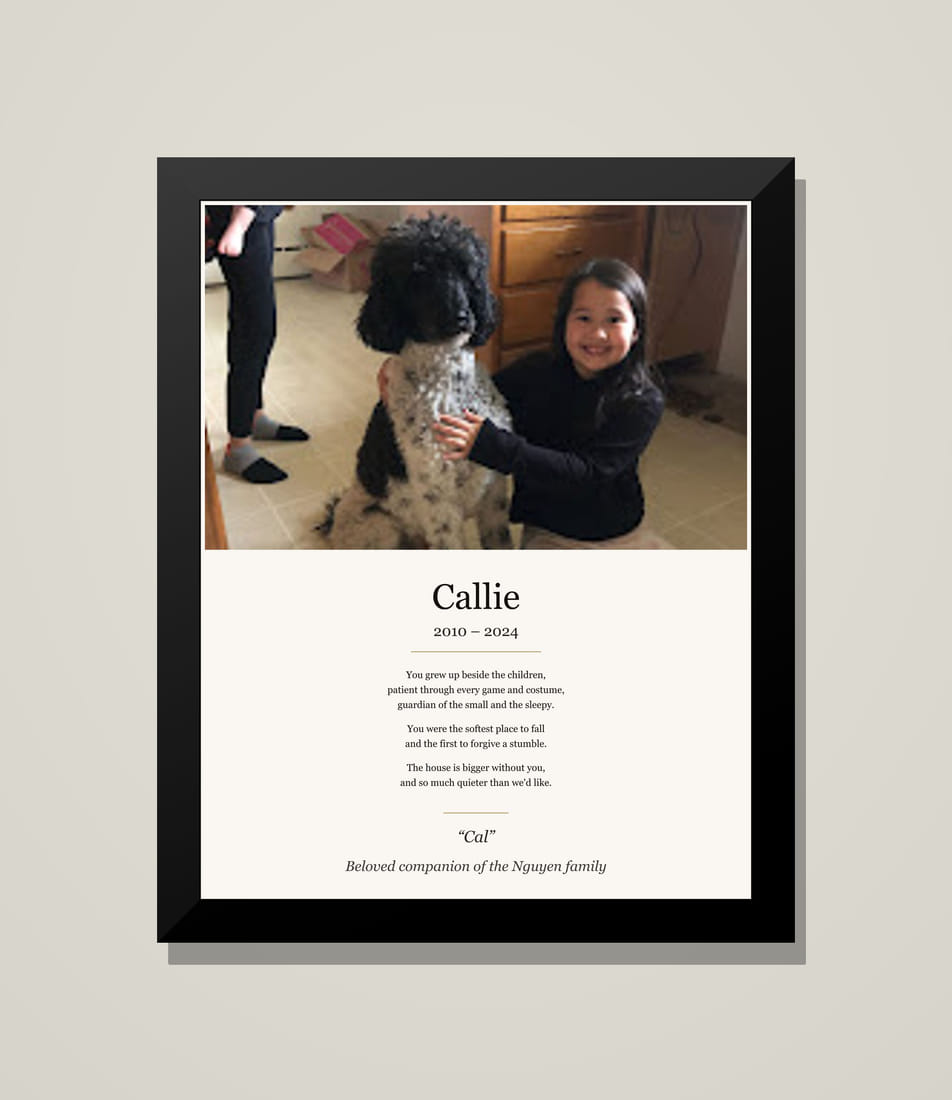
The house is bigger without you.Callie
Slow down now, sweet one. We will catch up to you.Biscuit
First, it makes you smile.
Before the turn, there is almost always a small joke. The pet caught being exactly, ridiculously themselves. That's what makes them feel alive on the page, so the ache that follows lands on someone real instead of a symbol.
A wall of them. No two could be swapped.
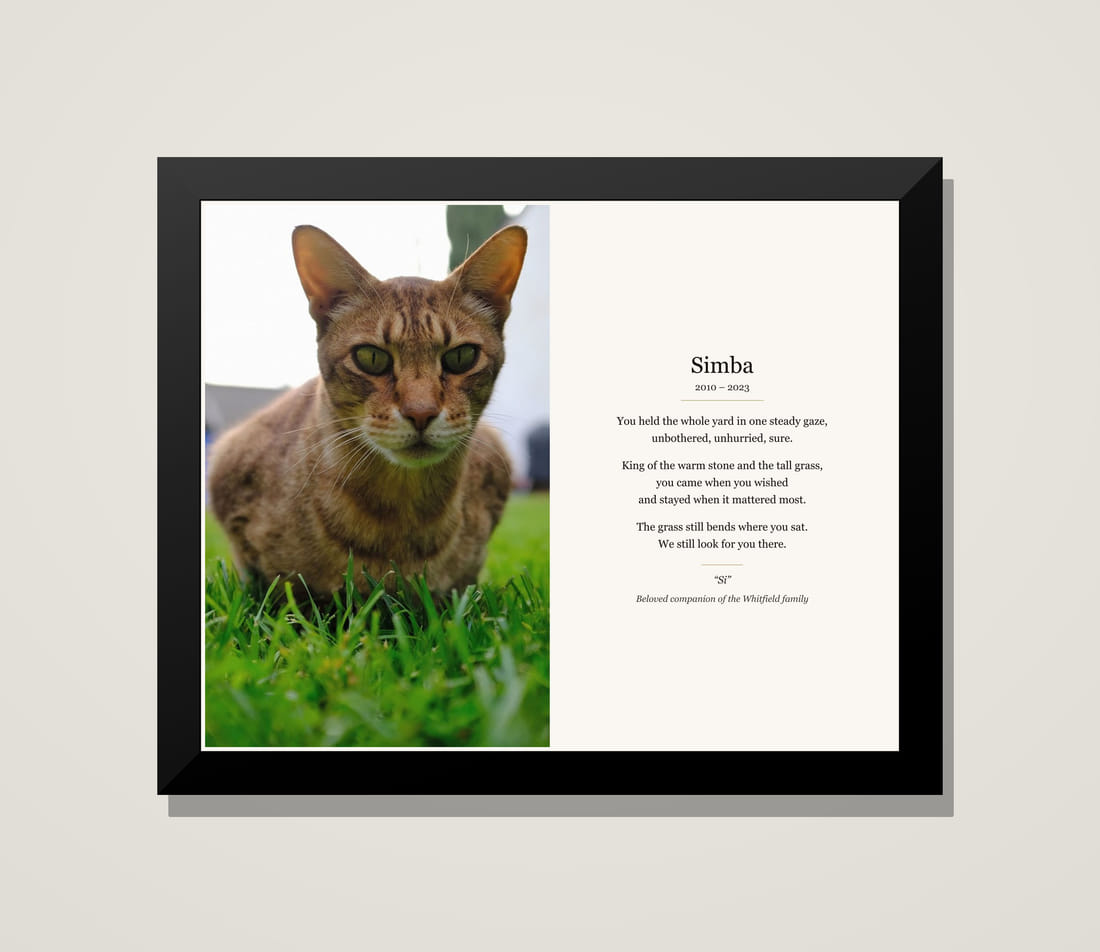
Each tribute is written from scratch for one animal, with its own habits, its own room, its own small joke. Hang a dozen together and the writing never repeats itself.
From the families.
Some of these went home to real families. Here is what they wrote back.
“A soft gold comma at the end of our days” is one of the most beautiful descriptions of him I could imagine. Mittens spent his life finding the warmest patch of sunlight and reminding us to slow down. The poem did not only memorialize him. It made his way of living feel like something worth carrying forward.
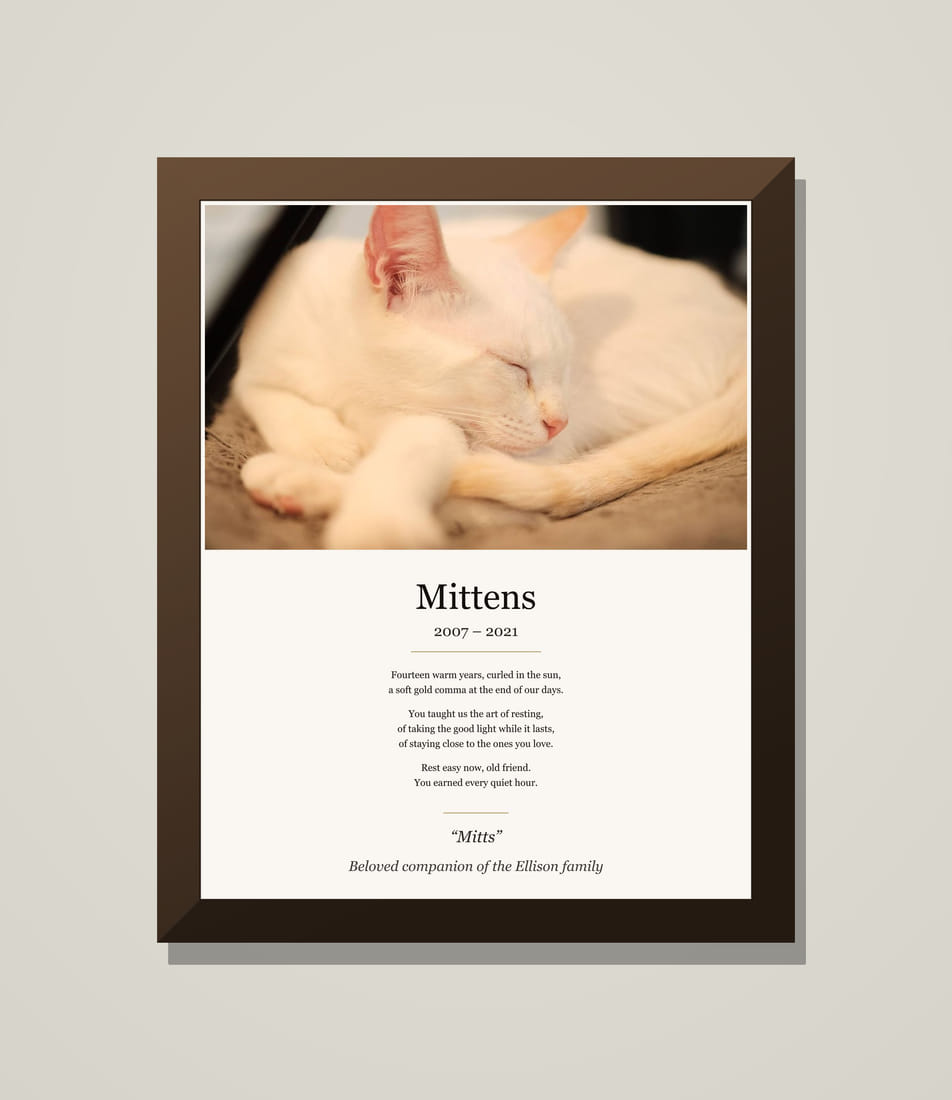 Rob & KathyOn Mittens' tribute
The line about the house feeling bigger and quieter was exactly right. Callie had been beside our children for nearly their entire childhood. She was woven into every ordinary family moment. The memorial made us realize we were not only grieving her, but also the end of an entire chapter of our family's life.
Danielle T.On Callie's tribute
“Slow down now, sweet one. We will catch up to you.”
A photograph freezes a moment. A tribute like this gives the whole animal back: the mischief, the routine, the particular way the house feels without them.
That balance is the product.
The specific detail. The small joke. The thing left on the porch. That is what separates this from sentimental, interchangeable memorial poetry, and it is why it stays on the wall instead of in a drawer.
Their story is kept. Their room stays theirs.